
HARRISON
Machine & Plastic Corporation


HARRISON
SUPERDUCT®
PVC Duct Pipe

- Home >
- Corzan® CPVC Duct Pipe & Fitting Specifications >
"CAN'T FIND IT? CALL HARRISON."
- PVC Duct Pipe & Fittings
- HARRISON SUPERDUCT® PVC Pipe
- Prices
- Pipe & Fitting Specifications
- Dimensions
- CPVC Duct Pipe & Fittings
- Corzan® CPVC Pipe
- Prices
- Pipe & Fitting Specifications
- Dimensions
- PVC Schedule 40/80 Pipe & Fittings
- Schedule 40 Prices
- Schedule 40/80 Specifications
- Schedule 80 Prices
- CPVC Schedule 40/80 Pipe & Fittings
- Schedule 40 Prices
- Schedule 40/80 Specifications
- Schedule 80 Prices
- Specialty Products
- Metric DIN Flanges
- PVC Blind Flanges
- 300# Flanges
- Plastic Machining
- General
- Prototypes
- Plastic Fabrication
- Fittings
- Custom Fabrication
- Tanks
- Duct & Air Handling Systems
- HARRISON SUPERDUCT® PVC Systems
- CPVC Duct Systems
- Scrubbers
- Hoods
- Ductwork
- Plastic Sheet
- PVC & CPVC sheet
- Polypropylene sheet
- Expanded sheet
- Perforated sheet
Printable
PVC & CPVC Duct Pipe &
Fittings Specifications
Corzan® CPVC Pipe & Duct Fittings
CPVC Pipe Dimensions & Specifications
CERTIFIED CORZAN® CPVC QUALIFIED FABRICATOR
- Corzan® CPVC Duct Pipe Specifications
- Corzan® CPVC Duct Pipe Dimensions
- Corzan® CPVC Max. Internal Negative Pressure Rating Chart
- Corzan® CPVC Max. Internal Positive Pressure Rating Chart
- Corzan® CPVC Duct Pipe Physical Properties
- Corzan® CPVC Sheet Physical Properties
- Corzan® CPVC Duct Installation
- Solvent Cement Welding
- General Information
- Hot Air Welding
- Hangers and Supports
- Application Guidelines
- Suggested Standard Duct & Fitting Specifications for Corzan® CPVC
Corzan® CPVC Duct Pipe Specifications
Application
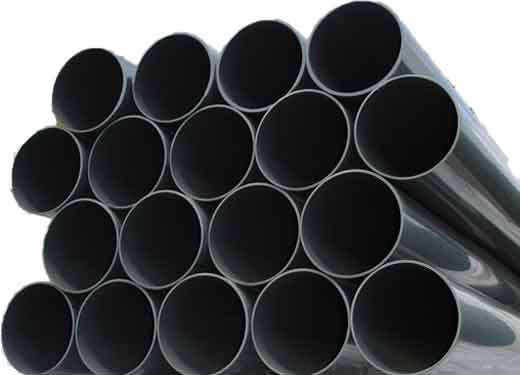
Seamless, corrosion resistant exhaust duct, IPS sizes 2" through 24", for use in corrosive fume handling systems at temperatures up to 200°F. Duct exhibits excellent fire resistance and is classified for Surface Burning Characteristics. Offers exceptional physical properties, and is generally resistant to most: acids, bases, salts, aliphatic solutions, oxidants, and halogens. Chemical resistance data is available and should be referenced for proper material selection. Typical applications include: chemical processing, plating, water and wastewater treatment, laboratory, and other industrial and institutional applications involving corrosive fume collection, transfer, and reclamation.
Scope
This specification outlines minimum manufacturing requirements for Chlorinated Polyvinyl Chloride (CPVC) iron pipe size (IPS) seamless, extruded round duct. This duct is intended for use in industrial fume handling systems where temperatures encountered do not exceed 200° F.
CPVC Materials
The material used in the manufacture of the duct shall be a virgin, rigid chlorinated polyvinyl chloride (CPVC) compound, with a Cell Classification of 23437 as defined in ASTM D1784. This compound shall be light gray in color.
| Corzan® CPVC Duct Pipe Dimensions | |||||||
|---|---|---|---|---|---|---|---|
| Size (in.) | AVG. O.D. | AVG. O.D. TOL. |
O of R TOL. |
MIN. Wall |
AVG. Wall |
MAX. Wall |
WT (lbs.) Per Ft. |
| 6" | 6.625 | ±.020 | ±.050 | .172 | .187 | .202 | 2.555 |
| 8" | 8.625 | ±.020 | ±.075 | .172 | .187 | .202 | 3.349 |
| 10" | 10.750 | ±.025 | ±.075 | .172 | .187 | .202 | 4.192 |
| 12" | 12.750 | ±.025 | ±.075 | .172 | .187 | .202 | 4.986 |
| 14" | 14.000 | ±.030 | ±.075 | .172 | .187 | .202 | 5.485 |
| 16" | 16.000 | ±.030 | ±.075 | .172 | .187 | .202 | 6.273 |
| 18" | 18.000 | ±.040 | ±.080 | .172 | .187 | .202 | 7.580 |
| 20" | 20.000 | ±.070 | ±.0140 | .199 | .219 | .239 | 9.146 |
| 24" | 24.000 | ±.090 | ±.180 | .230 | .250 | .270 | 12.536 |
| O of R = Out of Roundness Factor at time of extrusion | |||||||
| Corzan® CPVC MAX. Internal Positive Pressure Rating | |||||||
|---|---|---|---|---|---|---|---|
| Inches of Water @ Various Temperatures °F | |||||||
| Size (in.) | Temperature °F | ||||||
| 73 | 100 | 120 | 140 | 160 | 180 | 200 | |
| 6" | 426 | 371 | 316 | 263 | 208 | 153 | 98 |
| 8" | 193 | 168 | 143 | 118 | 93 | 70 | 45 |
| 10" | 100 | 86 | 73 | 60 | 48 | 35 | 23 |
| 12" | 60 | 51 | 43 | 36 | 28 | 20 | 13 |
| 14" | 45 | 38 | 33 | 26 | 21 | 15 | 10 |
| 16" | 30 | 26 | 21 | 18 | 13 | 10 | 6 |
| 18" | 26 | 23 | 20 | 16 | 13 | 10 | 6 |
| 20" | 28 | 25 | 21 | 16 | 13 | 10 | 6 |
| 24" | 20 | 18 | 15 | 13 | 10 | 6 | 3 |
| PSI=Inches of Water x .0361; Inches of Mercury = Inches of Water x .07355 | |||||||
| Corzan® CPVC MAX. Internal Negative Pressure Rating | |||||||
|---|---|---|---|---|---|---|---|
| PSI @ Various Temperatures °F | |||||||
| Size (in.) | Temperature °F | ||||||
| 73 | 100 | 120 | 140 | 160 | 180 | 200 | |
| 6" | 70 | 56 | 45 | 35 | 26 | 16 | 13 |
| 8" | 53 | 43 | 33 | 26 | 20 | 13 | 10 |
| 10" | 43 | 35 | 28 | 21 | 16 | 10 | 8 |
| 12" | 36 | 30 | 23 | 18 | 15 | 8 | 6 |
| 14" | 33 | 26 | 21 | 16 | 13 | 8 | 6 |
| 16" | 28 | 23 | 18 | 13 | 11 | 6 | 5 |
| 18" | 25 | 20 | 15 | 11 | 10 | 5 | 5 |
| 20" | 26 | 21 | 16 | 13 | 10 | 6 | 5 |
| 24" | 25 | 20 | 15 | 11 | 10 | 5 | 5 |
| Corzan® CPVC Duct Pipe Physical Properties | |||
|---|---|---|---|
| CPVC duct is extruded from FM4910 specification tested Corzan® CPVC compounds as manufactured by Lubrizol Advanced Materials, Inc. Fittings are fabricated from Corzan® CPVC duct material manufactured with Corzan® compounds. | |||
| Standard specifications for Harrison rigid CPVC duct, pipe, fittings and fabrication | |||
| PIPE/DUCT & FITTINGS: ASTM-D-1784 Cell Class 23447 | |||
| PROPERTY | ASTM Test Method | VALUE | UNITS |
| MECHANICAL | |||
| Tensile Strength @ 73°F (23°C) | D-638 | 7,600 | psi |
| Modulus of elasticity in Tension @ 73°F | D-638 | 370,000 | psi |
| Flexural Modulus @ 73°F | D-790 | 360,000 | psi |
| Flexural Strength @ 73°F | D-790 | 12,500 | psi |
| Izod Impact Strength notched @ 73°F | D-256 | 2.6 | ft.lb./in. |
| Compressive Strength @ 73°F | D-695 | 10,000 | psi |
| Compressive Modulus @ 73°F | D-695 | 196,000 | psi |
| ELECTRICAL | |||
| Dielectric Strength | D-149 | 1,250 | volts/mil |
| Dielectric Constant, 60Hz, 30°F | D-150 | 3.70 | Hz/°F |
| Volume Resistivity @ 95°C | D-257 | 3.4 x 10¹⁵ | ohm/cm |
| CPVC pipe is non-electrolytic | |||
| Power Factor 1000 Hz | D-150 | .007% | Hz |
| THERMAL | |||
| Coefficient of Linear Expansion | D-696 | 3.9 x 10⁻⁵ | in./in./°F |
| Heat Deflection Temperature Under Load (264 psi, annealed) | D-648 | 228 | °F |
| Coefficient of Thermal Conductivity | C-177 | 3.27 x 10⁻⁴ | (Cal.)(cm)/(cm2)(Sec.)(°C) |
| .95 | BTU/hr/sq.ft./°F/in. | ||
| .137 | Watt/m/°K | ||
| FIRE PERFORMANCE | |||
| Limiting Oxygen Index (LOI) | D-2863 | 60 | % |
| Softening Starts (approx.) | 295 | °F | |
| Flame Spread | ULC/ASTM E-84/UL 723 | <25 | |
| Flame Spread Index | <10 | ||
| Smoke Generation | ULC | <50 | |
| Flammability Rating | UL-94 | V-0 | |
| Burning Rate | Self-Extinguishing | (in/min) | |
| Material Becomes Viscous | 395 | °F | |
| Material Carbonizes | 450 | °F | |
| Average Time of Burning | ASTM D-635 | <5 | Seconds |
| Average Extent of Burning | <10 | (in/mm) | |
| Flash Ignition Temp. | 900 | °F | |
| Clean Room Materials Flammability Test | FM 4910 | FPI = 1.9, SDI = .03 | |
| GENERAL | |||
| Material Cell Classification | D-1784 | 23447 | |
| Hardness (Rockwell) | D-785 | 117 | |
| Poisson's Ratio @ 73°F | .386 | ||
| Hazen-Williams Factor | C=150 | ||
| Water Absorption % increase 24 hrs. @ 25°C | D-570 | .03 | °C |
| Specific Gravity @ 73°F | D-792 | 1.53 ±.02 | g/cu.cm |
| Color | Medium Gray | ||
| Maximum Service Temp. | 200 | °F | |
| Corzan® CPVC SHEET PHYSICAL PROPERTIES | |||
|---|---|---|---|
| Standard specifications for Corzan® CPVC sheet | |||
| ASTM D-1784, Class 24446-B Cell | |||
| APPLIES TO SHEET IF USED | |||
| PROPERTY | ASTM Test Method | VALUE | UNITS |
| MECHANICAL | |||
| Compressive Strength | D-695 | 10,100 | psi |
| Compressive Modulus | D-695 | 196,000 | psi |
| Tensile Strength | D-638 | 7,300 | psi |
| Flexural Modulus | D-790 | 361,000 | psi |
| Flexural Strength | D-790 | 14,300 | psi |
| Izod Impact (Notched) | D-256 | 9 | ft.lb./in. o.n. |
| ELECTRICAL | |||
| Dielectric Strength | D-147 | 1250 | Volt/MIL |
| Dielectric Constant | D-150 | 3.70 | 60 Hz |
| Power Factor | D-150 | .007% | 1000 Hz |
| Volume Resistivity | D-257 | 3.4 x 10¹⁵ | Ohm/cm |
| THERMAL | |||
| Heat Deflection Temp. @ 264 PSI | D-648 | 198 | °F |
| Coefficient of Thermal Expansion | D-696 | 3.86 x 10⁻⁵ | in./in./°F |
| Thermal Conductivity | C-177 | .95 | BTU/in/hr/ft3/°F |
| FLAMMABILITY RATINGS | |||
| Flammability | UL-94 | .062" | V-0, 5VB, 5VA |
| Flame Spread | E-84 | 15 | |
| Limiting Oxygen Index | D-2863 | 60 | % |
| PHYSICAL | |||
| Water Absorption | D-570 | .03 | % |
| Rockwell Hardness | D-785 | 116 | R Scale |
| Density | D-792 | 1.47 | g/cm3 |
| Cell Class | D-1784 | 24446-B | |
Corzan® CPVC DUCT INSTALLATION
As fittings described in our catalog are built to Harrison specifications, Harrison can also provide systems to SMACNA specifications upon request.
CPVC duct systems are easily assembled since they basically consist of fittings that are bell-end to receive plain-end duct, or in the case of plain-end fittings and pipe they are assembled using sleeve couplings.
In the case of square and rectangular CPVC duct systems, these are always either welded together or connected by bolted flanges. Solvent cement is never used.
SOLVENT CEMENT WELDING
Solvent cement welding is by far the most widely used process for joining CPVC pipe & duct. Properly assembled, it is certainly the easiest way to make quality sealed joints.
To avoid the needless expense of repairing, perhaps back-welding a faulty joint, the following key points are emphasized to ensure quality joints:
1. Solvent cementing should not be attempted at temperatures below 40°F or much above 90°F. Joints should not be made in hot, direct sunlight.
2. Remove all burrs and chips from any duct that has been cut. With a clean, dry, cotton rag wipe away any surface contamination on the surfaces that are to be joined. If the surfaces are wet (i.e. condensation), DO NOT ATTTEMPT TO JOIN THEM-they will fail.
3. Using an applicator, approximately half the size of the duct diameter, apply PRIMER. The function of primer, in making quality joints, is to penetrate and soften the hard surfaces of CPVC duct. This must be done on BOTH surfaces to be joined. A simple rule of thumb, in checking the adequacy of surface priming, is the ability to scrape a few thousandths of the softened CPVC surface.
4. DO NOT ALLOW THE PRIMER TO DRY before applying the solvent. Once the two surfaces to be joined have been fitted together, give the joint a quarter twist (if possible) to thoroughly mix the two solvent reduced surfaces.
5. There are several sources of primer and CPVC solvent cement on the market. Before starting an installation, consult with your supplier of primer and solvent cement for advice on the best product to use for your application and work environment.
HOT AIR WELDING
Above 14" diameters, it is Harrison's experience that duct and fitting connections should be hot-air welded using CPVC welding rod and welding guns that are available from Harrison.
Harrison usually welds each joint using three passes of 5/32" CPVC welding rod.
Before welding, each joint should be prepared by cleaning the duct & fitting surfaces of any dirt, oil or other contaminant. This will ensure good fusion conditions.
Once the duct and belled-end fitting or coupling are securely seated, the fit should be secured by "tacking" the joint with a hot-air welding gun. The process of "tacking" creates a CPVC fusion between the two components, holding them in a position for the actual welding. Another benefit of "tacking" is that it seats the gap between the two components, so that during the actual hot-air welding, the CPVC welding rod and the two surfaces being joined are adequately heated to the point of a strong weld. If the joints were not first tacked then the hot air from the welding gun would pass through the gap resulting in the surfaces to be welded receiving heat inadequate for fusion with the welding rod. This would result in "cold joints" that are brittle and subject to failure under stress.
HANGERS AND SUPPORTS
| Duct Diameter | Min. Clamp Material | Rod Dia. | Max. Center Spacing |
|---|---|---|---|
| 18" and below | 1 1/4" x 1/8" | 1/4" | 8 feet |
| 19" thru 32" | 1 1/2" x 3/16" | 3/8" | 8 feet |
| 33" and above | 2 x 3/16" | 3/8" | 5 feet |
Maximum distance between vertical supports should be no more than 16 feet.
GENERAL
In diameters thru 14", Harrison has found that CPVC duct piping systems can be readily joined via the solvent cement method. Beyond 14", the actual cementing and drying times become so protracted that sections of large duct cannot be maneuvered into position quickly enough to effect a good solvent fusion before the cement hardens and dries.
It is our experience that with systems above 14", they should be joined via the hot-air welding method, using CPVC welding rod and welding guns available thru Harrison on either a rental or purchase basis.
APPLICATION GUIDELINES
CPVC Corzan® pipe and fittings are not intended for underground use.
CPVC shall carry a maximum operating temperature of 200°F and has the same self-extinguishing and low conductivity features as PVC.
SUGGESTED STANDARD DUCT & FITTING SPECIFICATIONS FOR (CORZAN®) CPVC
- Corzan® CPVC material components used in the manufacture of duct pipe and the fabrication of fittings shall conform to Type IV, Grade 1 CPVC, Cell Class 23447, as described in ASTM D-1784.
- Duct diameters thru 20" & 24" will be extruded and of seamless construction. Sizes thru 18" will have a 0.187" wall thickness. 20" diameter will be @ 0.219" and 24" @ 0.250" thickness.
- Fabricated (heat formed) duct diameters 22" and 26" thru 30" will have a 0.187" wall while 32", 34" and 36" & larger diameters will have a 0.250" wall. Fabricated duct shall consist of a singular buttwelded seam, thermally fused under computer controlled temperature and pressure, without the use of CPVC welding/filler rod.
- All extruded duct shall be furnished in 10 or 20 foot lengths, plain end; fabricated duct will be furnished in standard 4 foot lengths with a coupling attached on one end.
- Three piece 90° elbows and two piece 45° elbows are considered standard and are furnished with a centerline radius of approximately 1 to 1 1/2 times the duct diameter. Five piece 90° elbows and 3 piece 45° elbows, per SMACNA specifications, can be provided, on specific project requirements.
- All couplings will be "sleeve" type style having an over-all length of 4 1/2"
- All belled end sockets (5" and above) shall have a minimum socket depth of 2" or more. 2", 3", & 4" belled socket depths will be @ 1 3/4".
- Branch fittings are designed to enter the main duct, at an angle not exceeding 45° Branch 90° tees are available where systems allow.
- Transition fittings shall have formed corners where practical. They will be of concentric design (unless otherwise requested) with a tapered cone-type body.
- Reducer couplings having a size reduction greater than "two-step", shall be formed with cone-type body having and overall length generally calculated @ 4" per 1" size reduction, where space allows. One-step and two-step reducers will have a smooth-flow concentric design.
- Blastgate Dampers shall be furnished with a 3-position locking pin (open, half-open, closed).
- Butterfly (Balancing) Dampers shall be furnished with a locking quadrant, to permanently position. Motorized dampers are available on request.
- Rain Caps shall be of "Zero Pressure Loss" design, commonly known as Style "B". Style "A" Rain Caps are also available on request.